What Insurance claim required docs mean for your coverage
"The paperwork is often more daunting than the event that triggered the claim itself."
Preparing the right insurance claim required docs ensures that your request is processed efficiently by the carrier. This guide covers the essential paperwork needed for various coverage types, how to organize your files, and what to watch for during the submission process.
You will learn about standard policy language, the difference between owner and lender documentation, and specific limitations regarding run-off companies.
How to prepare claim docs effectively?
At the heavy oak desk, I slide the thick stack of folders into place to organize my insurance paperwork before the sun sets.

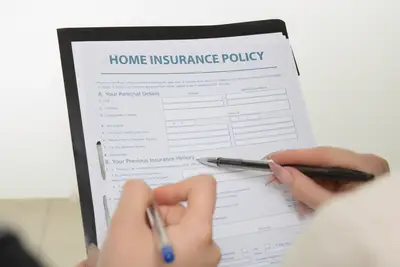
A person sits at a wooden desk, spreading out a stack of medical bills and policy printouts to organize a messy pile. To start the process, you must first gather your original policy documents to understand the specific terms and coverage limits applicable to your situation.
An insurance claim required docs checklist should always begin with your policy contract to verify which clauses apply to your specific loss.
Because property and casualty insurers in the United States typically use similar or even identical language in their standard insurance policies, drafted by advisory organizations such as the Insurance Services Office and the American Association of Insurance Services, understanding these standard terms is crucial.
You must match the loss event to the specific language used in your coverage.
The next step involves gathering evidence that directly supports the loss described in your policy. This might include receipts, photographs, or official reports depending on the type of claim you are filing. Maintaining a clear paper trail helps prevent delays during the adjustment phase.
- Gather all relevant receipts and proof of ownership.
- Organize documents chronologically to establish a clear timeline.
- Review each file for accuracy before submission.
- In this sequence, the second step is the most extensive.
What kinds of insurance paperwork will I need? Insurance claim required docs In the quiet office, my fingers tremble as I sort through the various insurance forms during the late afternoon.
An adjuster walks through a damaged living room, taking notes on a clipboard while checking the policy limits for structural repairs. Different insurance sectors require unique sets of documentation to verify the validity of a claim.
For instance, title insurance involves specific documentation meant for both owners and lenders. Standardized forms of title insurance exist for owners and lenders to ensure the legal transfer of property is documented.
If you are dealing with property ownership issues, having these standardized forms ready can streamline the verification of your title.
In other sectors, such as bond insurance, the documentation focuses on the obligations of the underlying debt.
For example, in 1999, the New York State Insurance Department (NYID) issued guidance regarding insurance of obligations under credit default swaps, which facilitated the participation by financial guaranty insurers in the CDS market.
Understanding the regulatory context of your specific insurance type helps in preparing the correct financial proofs.

Commonly used papers include policy declarations, damage assessment reports, and proof of loss statements.
Which documents are essential for my property claim? A homeowner holds a printed policy in one hand and a repair estimate in the other, comparing the two carefully. When dealing with property-related losses, the documentation must bridge the gap between the incident and the policy's coverage scope.
To manage a property claim, follow these three steps:
- Review the policy language to identify the specific coverage for the loss type. 2. Collect all physical evidence, such as damage photos or repair estimates, to substantiate the claim. 3. Submit the completed insurance filing papers along with a signed claimant statement.
I remember looking at a thick binder of paperwork and realizing that the policy language was the most important tool for determining what was covered. Always check the "exclusions" section of your policy before submitting your documents to ensure your claim is valid under the current terms.
Essential documents include photographs of the damage, repair estimates, and original purchase receipts.
What is the difference between owner and lender documents?
A lawyer reviews a title report while a client waits in the office, looking over the legal implications of the paperwork. In certain types of insurance, the needs of the policyholder and the financial institution can differ significantly.
In the context of title insurance, the documentation serves different purposes for different parties. While owners need proof of clear title, lenders require documentation that protects their financial interest in the property.
A 2007 book attacking the American title insurance "cartel" acknowledged that "[m]ore extensive use of Torrens certification would require setting up a special judicially supervised bureaucracy." This highlights how specialized systems can influence the types of paperwork required for legal verification.
| Document Type | Primary Purpose |
|---|---|
| Owner Documentation | Verifies personal ownership rights |
| Lender Documentation | Protects financial interest in assets |
Owner documents focus on proof of loss and asset valuation, while lender documents typically involve mortgage clauses and loss payee authorizations.
Are there limitations to claim payments?
A representative at a window informs a client that certain older policies have specific payout constraints. It is vital to know that not all insurance companies operate under the same active status or payment structures.
According to the New York State Insurance Department, FGIC ceased paying claims in 2010 and is in run-off, now paying claims in part.
A significant limitation occurs when dealing with companies in "run-off" status. For example, by order of the New York State Insurance Department, FGIC ceased paying claims in 2010 and is in run-off, now paying claims in part.

This means that certain obligations are being fulfilled differently than active, standard insurance models. Always verify the current operational status of your insurer to understand how they handle claim distributions.
Payments may be limited by policy coverage caps, deductibles, or depreciation adjustments.
Wikipedia: Insurance (full) Based on the retained excerpt mentioning The Association of British Insurers: The Association of British Insurers (grouping together 400 insurance companies and 94% of UK insurance services) has almost 20% of the investments in the London Stock Exchange.
The same subject is also called Claim document checklist.
The same subject is also called Required claim documents.
The same subject is also called Insurance paperwork guide.
Related




Comments 0