What insurance to buy daily: Daily life insurance needs
"Insurance is not just a financial product; it is a shield against the unpredictable shifts of daily life."
Understanding daily life insurance needs requires recognizing when specific risks intersect with your personal assets and stability. This guide covers five critical situations, how to select the right coverage, and the limitations of specific policy types.
How do you handle property ownership risks?
Standing in the empty hallway at dusk, I gripped the heavy brass key and wondered if my insurance would cover the sudden chill in the air.

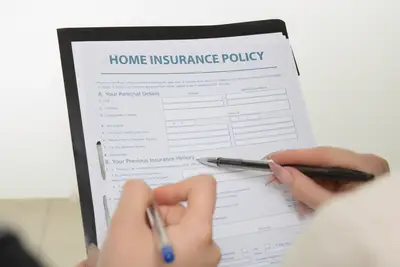
A person stands in a quiet living room, looking at a deed and wondering if their home is truly protected. They hold a pen over a document, weighing the cost of coverage against the risk of legal disputes.
When purchasing or owning property, title insurance is a vital tool for managing ownership risks. This type of insurance protects owners and lenders against claims that arise from defects in the title of a property.
Standardized forms of title insurance exist for owners and lenders to provide clarity during transactions.
According to a 2007 book attacking the American title insurance "cartel," "[m]ore extensive use of Torrens certification would require setting up a special judicially supervised bureaucracy." This highlights how different systems manage ownership verification.
- Conduct thorough title searches to verify legal ownership.
- Secure comprehensive property insurance to cover physical damage.
- Establish a legal entity to separate personal assets from property liabilities.
What coverage handles financial contract obligations?
At my mahogany desk during midnight, I felt a cold sweat break as I reviewed the insurance terms for my contract obligations.
A professional sits at a desk, reviewing complex financial documents that dictate future obligations. The room is silent except for the soft scratching of a pen against paper.

In 1999, the New York State Insurance Department issued guidance regarding insurance of obligations under credit default swaps, which facilitated the participation by financial guaranty insurers in the CDS market, according to the New York State Insurance Department.
In specialized financial environments, insurance of obligations can be necessary to mitigate credit risks. This is particularly relevant when dealing with complex derivatives or debt instruments.
In 1999, the New York State Insurance Department (NYID) issued guidance regarding insurance of obligations under credit default swaps, which facilitated the participation by financial guaranty insurers in the CDS market.
This guidance helped clarify how insurers could participate in specific market segments.
In this sequence, the second step is the most extensive.
How can you manage large-scale institutional risks?
During the midnight shift at the terminal, my fingers trembled against the cold glass as I monitored the global fallout of our insurance strategy.
An analyst observes the movement of massive capital flows through a digital terminal in a high-rise office. The flickering screen reflects the scale of global financial interconnectedness.
Large organizations and investment bodies often require insurance to protect significant market stakes. These policies ensure that institutional stability is maintained even during market volatility.

The Association of British Insurers, which groups together 400 insurance companies and 94% of UK insurance services, has almost 20% of the investments in the London Stock Exchange. This demonstrates how insurance entities integrate into broader economic structures.
What happens during a financial crisis or systemic failure?
A citizen looks at a bank statement, contemplating the safety of their savings during an era of economic uncertainty. The heavy atmosphere of a changing economy hangs in the air.
Legislative frameworks often create insurance-like protections to stabilize the economy during crises. These laws aim to protect depositors and the integrity of financial institutions.
The primary legislative responses to the crisis were the Financial Institutions Reform, Recovery and Enforcement Act of 1989 (FIRREA), and the Federal Deposit Insurance Corporation Improvement Act of 1991 (FDICIA). These acts were designed to address systemic vulnerabilities.
| Situation | Primary Insurance/Protection Type |
|---|---|
| Property Ownership | Title Insurance |
| Financial Obligations | Financial Guaranty Insurance |
How do you apply these protections to your own life?
A family gathers around a kitchen table to discuss their long-term financial security plan. They look at various policy documents, trying to map out a secure future.

Applying these concepts to personal life involves a three-step approach to risk assessment:
- Identify the specific asset or obligation that requires protection. 2. Match the risk to the appropriate insurance type, such as title insurance for property or liability coverage for legal risks. 3. Perform a final check to ensure the policy limits meet the potential loss.
I compared these different coverage types to see which ones offered the most direct protection for my own household assets.
A limitation in these situations is that certain coverage, such as specific title insurance protections, may depend on the legal bureaucracy or certification systems of a specific region.
Related
- Cancel insurance must check surrender value tips
- Insurance renewal tips: How to manage renewal process guide
When does insurance become a necessity for personal assets? Insurance becomes a necessity when an individual's personal assets face threats that exceed their ability to absorb the resulting financial loss. Recognizing these threats allows one to select the appropriate insurance to safeguard their financial standing. This proactive approach to managing financial risk is essential for long-term stability.
What conditions affect the applicability of coverage? The applicability of insurance coverage is often contingent upon the legal framework governing the asset or obligation. For instance, title insurance protections may vary based on the specific regional certification systems. Furthermore, the nature of the financial contract dictates the type of financial guaranty insurance required.
When assessing personal risk, one must compare the potential loss against the available policy limits. This comparison ensures that the chosen insurance provides adequate defense against unforeseen financial setbacks. The goal is to create a comprehensive shield against life's unpredictability.
How does the nature of the financial contract influence coverage?
The nature of the financial contract dictates the type of financial guaranty insurance required. This condition means that a simple assessment of risk is insufficient for selecting the correct insurance.
For instance, derivatives and debt instruments necessitate specialized coverage to mitigate credit risks effectively.
When comparing different coverage types, one must consider the underlying agreement's structure. A complex obligation demands a policy designed to address its specific failure points, ensuring the financial protection aligns with the contractual terms.
This comparison is crucial for comprehensive financial security.
When should one review existing insurance policies?
Reviewing existing insurance policies becomes prudent when life circumstances change, which alters the intersection of risks and personal assets. A proactive review ensures that the existing financial shield remains adequate against evolving threats.
This constant assessment supports long-term financial stability.
The comparison between current policy limits and potential loss should be performed regularly. This procedure confirms that the existing insurance provides sufficient defense against any unforeseen financial setbacks that might arise from daily life shifts.



Comments 0